The speakers takes the conference to another level
We’ve all been at a conference where a speaker delivered an exhilarating knockout punch. After a brief hour of new insights, we’re filled with boundless energy and immediately want to go out and change the world. Does that sound familiar? A speaker can really take the impact of a conference to an extra level and help convey messages in an engaging way. But how do you recognize a good speaker? And more importantly, where are they?
In our industry, we often encounter people who convey thoughts, opinions, knowledge, and experiences from their own lives. In everyday parlance, we call them lecturers. Some are full-time professionals and almost exclusively make their living by being out in different parts of the country and inspiring others. Others do it as a complement to research, writing, leadership, and political work.
A skilled lecturer at a conference often involves a significant investment. Generally, you have to pay from 40,000 kr and upwards for a renowned speaker who delivers a message for one to two hours. Not infrequently, the price ends up being closer to 75,000-100,000 kr. Then it is of course extremely important that it is of good quality, i.e., that you get exactly what was intended. Perhaps you want to impart new knowledge, new tools for a task, or new insights within a specific subject.
That a lecturer will change the fundamental nature of things is probably not something that anyone would immediately expect. But it can provide a significant boost in a specific direction to reinforce the message of a meeting, drive a change in attitude within the company, or create some other form of new start.
What characterizes a good lecturer?
In my opinion, it primarily comes down to the lecturer's ability to identify the right content. for the lecture. The message should be razor-sharp, direct, and impossible to misinterpret. That sounds obvious, but I’ve been to quite a few lectures where I feel like the message was too general. That makes it hard to feel really engaged. It just doesn’t grab the heart. Besides providing inspiration, the content should also be entertaining. However, here it’s about finding the right balance – sometimes some inspirational speakers tend to get too ”funny.” When the lecturer is too focused on making the audience laugh, it’s easy to lose sight of the message.
A good lecturer is phenomenal at ”building up” the lecture. There is a clear plan that aims to engage – from the introduction, through the lecture, to the conclusion where you tie everything together and leave the audience filled with new energy and enthusiasm. I have listened to some speakers who have been absolutely fantastic in this regard. At the end, it felt like when you put together a really good novel after finishing the last page. The various parts of the lecture form the foundations for a resounding conclusion. All the speakers plan their beginning and their end, but not everyone fully masters the technique.
”At the end, it felt like reading a really good novel after finishing the last page.”
Thirdly, one should look at how lecturers use presentation tools. After all, very few lecturers manage to stand upright and down on a stage without any aids and still capture the audience’s attention. PowerPoint can be useful, but it can also be awkwardly bad if used incorrectly. Many images can be good for illustrating and reinforcing the message, but they can also distract. There are lecturers who make it easy for themselves and deliver images at a rapid pace, but the effect is that they dilute the message. Understanding the potential of (and the effects of) different presentation techniques can elevate a lecture. Combining different tools, such as PowerPoint, whiteboard and physical objects, can create tremendous dynamics.
Finally, I want to advocate for lecturers who dare to interact with their audience. It may be over-the-top, but it makes the whole thing a living performance rather than a lecture. The audience becomes participants and becomes part of the message. A greater personal engagement and participation also increases the learning rate and makes it easier to understand and absorb the intended message.
How to choose the right lecturer for the conference
When you search for speakers online, you have a huge selection to choose from. There is everything from sports personalities, survivors and adventurers to prominent entrepreneurs and researchers. So how do you choose the right speaker?
1. Set a clear purpose for the lecture. What do you want to get out of it? Start from the purpose and goals you have for the conference. Often, you can get skilled speakers to adapt their message within certain limits, so that it fits better with what you want to get out of the meeting. Don’t be afraid to have that discussion.
2. Ask for more than one suggestion for lecturers. Choose a number of people who communicate in a way that suits the target audience and have a stage personality that they can appreciate. Please ask for references or ask someone who works professionally with meetings for suggestions.
3. Be sure to get a speaker who is committed. Request at least one meeting, in person or via Skype/phone, before the lecture to ensure that you are in agreement on the message and to discuss expectations, the organization's challenges, or the like.
4. Request a clear quote so that you can see what is included, but also what is additional. Be sure to read the lecturer's requirements for equipment in the room.
Finally, I just want to say: Remember that great experiences create strong relationships. Both with your brand and between the participants. The right speaker brings out the experience of the meeting, strengthens the engagement of the participants, and makes the impact of your conference greater.
Good luck!
/Ola
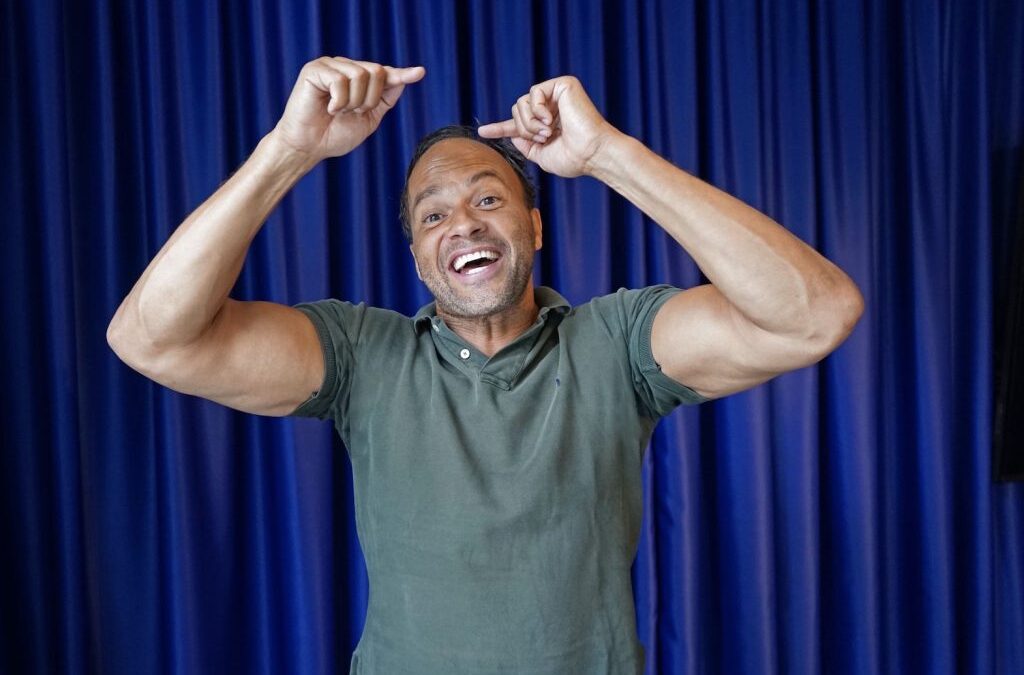
PS. Kelly Tainton (pictured) is one of my personal favorite speakers, who made a big impression on me. It has gotten so far that my colleagues have started to stare blankly when my experience comes up – I am still completely ”blown away”!
Photo: Kelly Tainton